The automotive trade between the UAE and Egypt has witnessed exponential growth. With Dubai being the primary sourcing hub for premium vehicles, thousands of Egyptian expats and commercial buyers look to import car from UAE every year. Sourcing a vehicle from Dubai offers massive advantages, including access to pristine GCC spec cars, competitive pricing, and tax-efficient trade channels.
However, Egypt enforces highly specific, strict customs regulations and administrative protocols for foreign vehicular imports. Navigating through Alexandria, Port Said, or Damietta customs requires absolute precision. This definitive 2026 step-by-step guide outlines everything you need to know to safely purchase and execute car shipping from Dubai to Egypt.
Section 1: Crucial Egyptian Import Regulations & Matrix Rules
Before you approach an authorized car export company UAE, you must understand who is legally allowed to import a vehicle into Egypt and under what conditions.
-
The Production Year Rule (New vs. Used): For standard Egyptian citizens, Egypt strictly prohibits the import of used passenger cars. The vehicle must be the latest model year and imported in its brand-new condition.
-
The First-Owner Exception for Expats: Egyptian expatriates living in the UAE can import a used car, provided they were the first owner of the vehicle, and the car was registered in the same year of manufacture.
-
Left-Hand Drive Compliance: Egypt is strictly a Left-Hand Drive (LHD) country. Fortunately, almost all vehicles available when you buy car from Dubai conform to this standard natively.
Section 2: Step-by-Step Sourcing and Documentation Process
Step 1: Selecting the Right Vehicle Portfolio
Egyptian buyers highly favor reliable, fuel-efficient, and structurally sound vehicles that can withstand diverse road terrains. Sourcing through Hyundai Export UAE channels or opting for a Toyota Export UAE inventory (like the Toyota Corolla, Hilux, or Hyundai Tucson) ensures high local resale value and easily accessible spare parts within Egypt. If you want more power, you can seamlessly buy SUV from Dubai under full regional specs.
Step 2: Essential Paperwork for Customs Validation
To clear Egyptian ports without severe penalties, the following authentic documentation must be certified and attested in the UAE:
-
Attested Commercial Invoice: Must detail the exact transaction value, engine number, and chassis number.
-
Certificate of Origin: Legalized by the UAE Ministry of Foreign Affairs and the Egyptian Embassy in the UAE.
-
RTA Export Certificate: Issued by Dubai’s Roads and Transport Authority under the buyer’s or the exporting company’s name.
-
Ocean Bill of Lading (BoL): Issued by the logistics provider managing the maritime freight.
Section 3: Logistics & Maritime Car Shipping from Dubai to Egypt
When dealing with international car shipping, transit safety is paramount. Cars exported from the UAE to Egypt are predominantly routed through two methods:
-
Container Shipping (Single or Shared): Your vehicle is securely locked inside a 20ft or 40ft steel container. This is highly recommended for premium models like the Peugeot 3008 Allure 2026 to shield them from marine salt and physical shifting during transit.
-
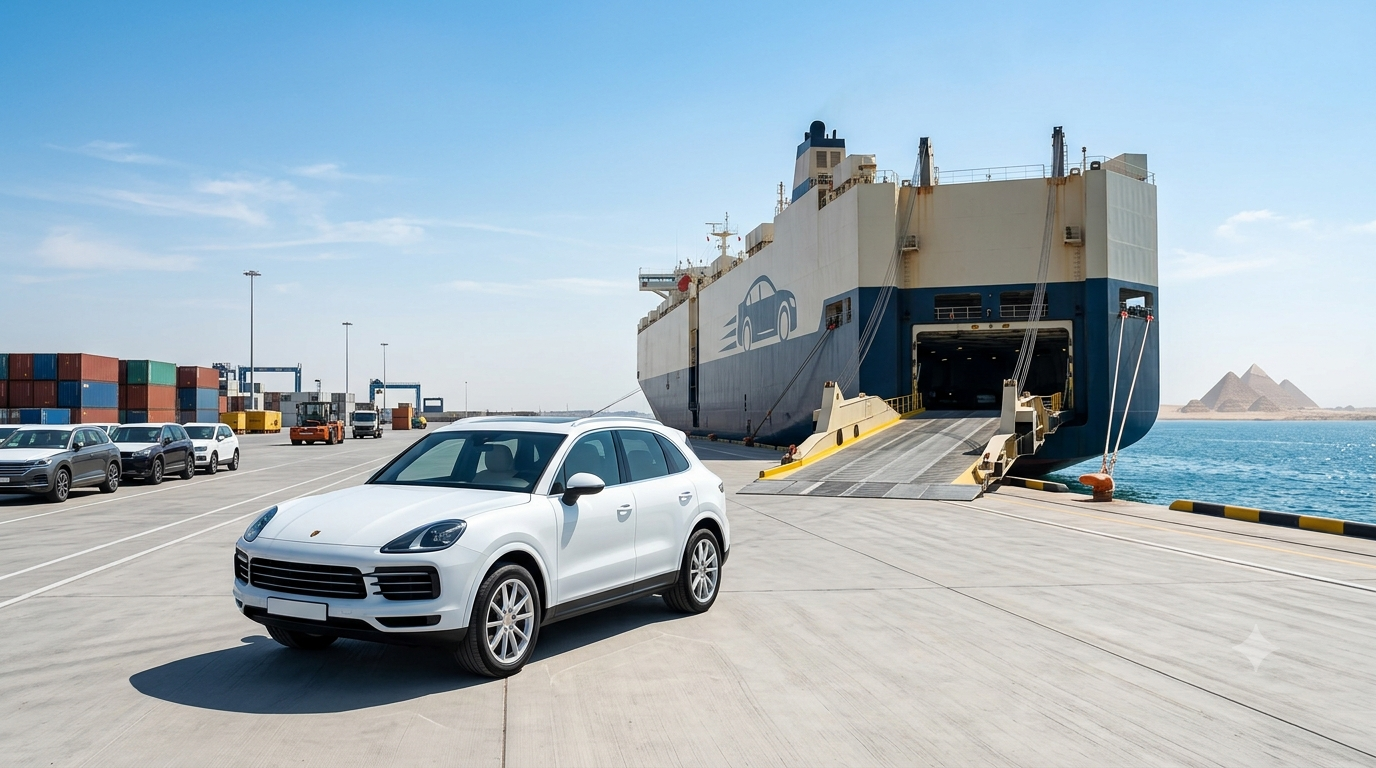
RoRo Shipping (Roll-on/Roll-off): The vehicle is driven directly onto a specialized cargo vessel. It is highly cost-effective but exposes the vehicle to open marine weather conditions.
Major Entry Ports in Egypt:
Section 4: 2026 Customs Duties, Taxes, and Clearances
Once the vessel docks at an Egyptian port, the customs clearance process begins. The total import cost is calculated based on the engine capacity ($cc$), which dictates the tax bracket:
-
Engines up to 1600cc: Subject to lower customs duties (usually around 40%) + 14% Value Added Tax (VAT) + 1% Development Tax.
-
Engines from 1600cc to 2000cc: Subject to higher brackets (around 135% customs duty) + 14% VAT + 15% Luxury/Schedule Tax.
-
Engines above 2000cc: Can incur up to 135% customs duties + 14% VAT + 30% Schedule Tax.
⚠️ Important Note on EU-Origin Cars: If you are importing a European-manufactured vehicle (like certain trims of Peugeot) from Dubai, check if it qualifies for preferential customs treatments under the Euro-Mediterranean Agreement, which can substantially lower the customs tariff if genuine certification is presented.
Importing a vehicle from the UAE to Egypt is an incredibly lucrative venture if you follow the structural guidelines precisely. By understanding the engine capacity tax brackets, ensuring all first-owner or new-model regulations are met, and partnering with an established car export company UAE, you can seamlessly manage your investment. From secure loading during car shipping from Dubai to final clearance at Alexandria port, strategic preparation guarantees a successful delivery.